Monday, 8 June 2015

Land Use and Agriculture in Hawaii

1) Describe the land use in your country. What percentage is agriculture? forest? urban? 

Hawaii has mild, year-round climate and it is a fertile place that sustains many different types of agriculture. Hawaii has both rural and urban areas. It is approximately 40 percent is agricultural/farmland. The state is home to approximately 3,600 crop farms and 1,100 livestock farms that include cattle, hogs, milk, eggs, and honey. The average agricultural sales per year in Hawaii are around $357 million dollars.Approximately 35 percent of Hawaii are forests and 25 percent is urban.


2) Look at the following three types of Agriculture : Monoculture, Polyculture, Slash and burn. Describe the pros and cons of each. Think about the social economic and environmental impacts.

I) Monoculture- is the cultivation of a single crop in a given area.
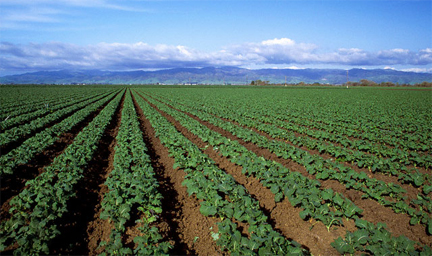


Pros:
-market driven
-cheaper option compared to rest
- single crop so cultivation is simpler
-economic advantage because farmers only harvest one type of crop.

Cons:
-lack of biodiversity
-single threat can destroy all the crops
-needs a complex irrigation system
-diseases/pests spread more effectively in monoculture. 

II) Polyculture- type of agriculture that uses many crops in the same space and they avoid large stands of single crops like monoculture. 


 Pros:
-needs less complex irrigation system
-reduces number of pests, weeds, and disease outbreaks because of increased variety of plants
-more stable type of agriculture
-consistent income for farmers since they don't need to depend on one type of production

Cons:
-higher investment in equipment
-laborious task for farmers
-farmers need to have knowledge of all their plants since there's such a large diversity
- difficult for farmers to control and supervise because of the different types of crops

III) Slash- agricultural technique which involves cutting and burning of plants in forests/woodlands to establish fields.


Pros:
-removes debris 
-less equipment used for farmers, cheaper
-returns nutrients to soil
-crops are recycled on site so decomposition occurs on field

Cons:
-fire hazard until its burnt
-dangerous for animals
-dangerous for humans, smoke may be a negative impact on health
-soil left bare for a long time will create erosion


3)What type of agriculture is common in your country? What types of crops do they grow? Describe the current state of agriculture in your country.


In recent decades, Hawaii has started the difficult transition from monoculture to diversified agriculture that encourages farmers to grow, among other things, fruits and vegetables for local consumption.Presently the most common agriculture in Hawaii is polyculture.  There are many types of diverse and traditional Hawaiian crops such as plantains, sweet potatoes, kalo, avocado's, papayas, rollinia, ulu (breadfruit), surinam cherries, and various other crops grown.  These plantings are  usually watered from local irrigation ditches.  Other important crops that come to mind when we think of Hawaii are sugarcane, pineapple, macadamia nuts and coffee bean crops. Hawaii has a very progressing and prosperous current state of agriculture because all the crops are in great demand and the mild year-round climate is perfect for growing the crops.


Sunday, 7 June 2015

Case Study: Desertification in Botswana


1) What is desertification? Give a general overview  of what it is and what are its causes


Desertification is a type of land degradation where dry land regions become really arid.In other words, when land becomes like a desert. It loses its bodies of water, vegetation and wildlife. Desertification is caused by a variety of factors like climate change. It can also be caused by human activities such as overgrazing, bio-industrial practices, poor irrigation practices  and deforestation.


2) Describe the PHYSICAL characteristics of Botswana and how these are impacting desertification. Remember that physical is things that would be there whether humans existed or not and include the climate, the flora and fauna, the landscape.


i)Climate- 

Climate change and the general rise in temperature in Botswana, will raise the evapotranspiration which can lead to soil humidity and an increase in the number of droughts. The deterioration of topsoil in drylands is the effect of temperature variations, rainfall and soil humidity which increases the process of desertification.


ii)Flora-Land degradation due to drought, salinity or over-exploitation has immediate consequences on the capacity of vegetation to maintain or reconstruct itself. This kind of poor vegetation will cause  land degradation to occur resulting in a desert like area.


iii)Fauna- Animal species, dependant on vegetation have to migrate to other areas to find sufficient resources or they risk disappearing altogether. The importance of this loss derives from the fact that animal and plant species from dry lands are particularly well adapted to their extreme environment. They act as indicators of the environmental condition of these areas and their disappearance is a sign of significant habitat degradation. This can have a negative imapct causing desertifcation to happen in Botswana. Desertification typically loses its bodies of water as well as vegetation and wildlife.

iv)Landscape- 
Land degradation would occur causing soil to erode or disappear which would increase the process of desertification. This can have a direct impact on the water cycle causing it to be scarce or threatened. Low rainfall causes more and more droughts to occur.

3) Describe the HUMAN causes of desertification in Botswana. How are humans making it worse?


Human causes of desertification in Botswana can be overgrazing where farmers allow livestock to graze to the point where they damage vegetation. Another human cause would be deforestation which is the process of removing trees and transforming a forest into cleared land. Overgrazing and deforestation are large human causes which can  lead to desertification because they remove or damage the vegetation that is protecting the land. Other causes of desertification is farming of average land, destruction of plants in dry region, and incorrect irrigation in arid regions which causes a build up of a salt in soil. Another reason in Botswana is the population, livestock/agriculture, the development of a market oriented economy, high cattle, groundwater and bore drilling. Over the past decades, population has increased rapidly causing more food to be produced. There hasn't been enough water for everybody to drink and use. Also not enough for crops which is why Botswana became like a desert.


4) Describe some of the problems associated with solving the problem in Botswana, as well as some of the steps that have been taken to protect the environment and people. 

Botswana has a large population which may be a problem which is associated with solving the problem in Botswana. The population needs to be managed otherwise things will get worse and worse in matters of desertification. By decreasing the population size, there will be a decrease in human activity causing there to be a decrease in drylands hence more rainfall. Education plays a huge role in society, teaching the public how to respect the environment and use supplies efficiently is an important step to overcome desertification in Botswana. People have tried to not overgraze, deforest less, cause less destruction of the natural habitat and several other steps have been taken to protect Botswana from deforestation.


Case Study: Flooding in Brisbane Australia

1) Describe the causes of the flooding. Consider both the natural and human causes of the flood. 

There are many causes of flooding, both natural and human related. It usually happens in coastal areas. The major cause of flooding in Australia is heavy rainfall. Other natural causes of flooding are hurricanes, storms and tsunamis. Human causes can be urbanization and mining. Another major reason for flooding can be pollution and infrastructure. There are several reasons for flooding either naturally or because of human activities.


2) Describe the social (impact on people), economic (money), environmental impacts of the floods. 


Social:

-loss of lives
-some people become homeless
-floods can cause people to get diseases and infections
-many people can be injured and many safety hazards
-Physiological impacts on people (losing family, harsh events they face)
-peoples homes are destroyed


Economic:

-Property damage which needs to be paid for
-Federal government needs to pay for rescue aid
-Price of food increases because of limited supply
-Firefighters, police officers, and other emergency apparatuses come at a heavy cost to people and the government.
-people in poverty, need income
-relief and recovery costs
-need money to rebuild the city


Environmental:

-forests destroyed
-chemicals and other hazardous substances end up in the water ( water contamination)
-animals killed and other insects are introduced to affected areas
-distorts the natural balance of the ecosystem
-damage to ecosystem/landscape
-waterways contaminated


3) How is the government of Queensland preparing for future potential floods? 


The government of Queensland is trying their best to prevent flooding by creating plans to overcome the heavy rainfall in Australia and they are also educating and keeping the public aware of what's happening and they are giving strategies to families for an event of a flood. One of the major causes is the overflow of drainage in heavily populated areas which becomes disastrous when there is heavy rainfall. Australians are able to seek help if needed, and they can get local flood maps so that they know where the flood prone areas are. Australians prepare for the flood by getting sturdy and strong framing for their homes and are now getting homes on a higher floor so that water doesn't seep in easily at a time of a flood. Many efforts are being made to teach and thoroughly prepare the public for an event of future floods in Queensland.


Monday, 1 June 2015

Waikiki Beach Study


1) Describe the causes of erosion on Waikiki Beach. (5 marks)

Waikiki Beach is one of the famous beaches in Hawaii. Many locals and tourists visit the beach all year round. Some causes of erosion on Waikiki Beach are soil compaction, low organic matter, loss of soil structure, poor internal drainage, salinisation and soil acidity problems.


2) Describe past and present attempts that have been made to save the sand of Waikiki beach. Assess how well you think that they have worked. (10 marks)

The past attempts to save the sand of Waikiki beach have not been successful since it has proved to happen again. Waikiki beach has been having erosion problems since the late 1800s . By the 1950s, more than 80 structures , including seawalls, groins, piers, and storm drains were counted along the Waikiki shoreline to protect itself from erosion. Efforts to combat erosion have been average because of the sea level rising about a foot each year, the threat of losing Waikiki beach has become more and more realistic. 52 to 72 percent of beaches on the chain of islands have eroded over the past century due to sea level rise.Even after a 2.2 million dollar sand restoration, Waikiki beach began eroding less than a year later.  I think all the attempts to save the sand have been temporary and mediocre since the erosion continues to happen.  I think as humans, we can try our best to repair such a famous and spectacular beach but we can't stop mother nature from doing what is meant to happen. I think constant planning and check ups on the beach should be made so that our efforts could be successful. A lot of money is also required to initiate such long term and rigorous plans to save the sand of Waikiki beach. I don't think a lot of people know that Waikiki beach has a soil erosion problem, by making people globally more aware of this and fundraising to save the beach, funds could be collected to go into a long term plan to protect the beach. I am assuming people around the world would love to help because Hawaii is such a popular destination spot for tourists and they might have gone to Waikiki Beach or plan to visit it one day.


3) Describe the economic, social, and environmental impacts of erosion of Waikiki beach for both the residents of the area, and tourists. (15 marks)

Economic:
-Can be very costly to fix erosion damage
-money required to fix roads and tracks
-shrinking Waikiki beach can cause less visitors resulting in hundreds of millions less in expenditures
-Hawaii relies on tourists for profit and if they don't come, people wont make money
-decline in supply and demand 


Social:
-bad air quality can have a negative impact on human health
-jobs may be jeopardized
-loss of recreational activities such as surfing because of dangerous walls and sharp edges because of erosion
-safety in jeopardy because of all the damage at the beach
- exposed concrete can cause harm to people


Environmental:
-Can negatively impact soil quality (inable to store water and nutrients)
-Can ruin the air quality
-Can ruin the quality of water
-loss of newly planted crops
-deposits of silt in low-lying areas